Book summary
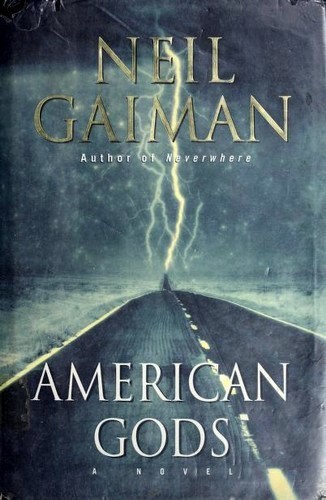
American Gods
Summary
The Cost of Belief
Neil Gaiman’s American Gods is a dark, imaginative blend of fantasy and Americana. It tells the story of Shadow Moon, an ex-convict who becomes the bodyguard for a con man named Mr. Wednesday. This job drags Shadow across the United States and into the middle of a brewing war between the Old Gods-deities brought to America by immigrants-and the New Gods, manifestations of technology, media, and modern life. The novel is not just a fantasy adventure but a meditation on the nature of belief, the American immigrant experience, and the things we choose to worship.
Gods Among Us
The central concept of the book is that gods are real, but they are created and sustained by human belief. As the text suggests, gods do not create humans; humans create gods. The human mind acts as a lens, focusing energy until an entity takes physical shape. Consequently, a god’s power is directly proportional to the number of believers they have. If human belief is the currency of the divine, then a forgotten god is simply a bankrupt immortal trying to avoid eviction.
In Gaiman’s universe, these entities survive by feeding on belief, prayers, and love. It is a biological imperative for them. A lack of belief equates to starvation. This dynamic explains the novel’s primary conflict. The Old Gods, brought to America by settlers and slaves, are fading because their original believers assimilated, languages died out, and traditions were lost. They are stranded on foreign soil, cut off from their primary food source. They are reduced to living in squalor, scraping by as grifters, prostitutes, or small-town oddities.
The Rise of the New
Contrasted with these fading relics are the New Gods. These beings represent modern obsessions: technology, media, the internet, money, and transportation. They are younger, sleeker, and far more ruthless. They possess staggering power because Americans willingly sacrifice their most valuable finite resources to them every single hour of every single day. The novel notes that we elevate technology to godhood, sacrifice everything to it, and the moment the next upgrade arrives, we discard the old god entirely.
The New Gods wish to eliminate the Old Gods entirely. They view the ancient deities as obsolete clutter taking up space in a world that has moved on. They act with corporate efficiency, hiring men known as the Spooks or Black Hats to abduct and kill the old pantheon.
The Great Con
Shadow Moon is caught in the middle of this. After being released from prison early due to his wife’s death, he takes a job with Mr. Wednesday. It is eventually revealed that Wednesday is an incarnation of Odin, the Norse All-Father. He travels the country recruiting Old Gods for a final battle against the New Gods.
However, the narrative twists when it is revealed that the war itself is a setup. Mr. Wednesday and Mr. World-the leader of the New Gods-are actually working together. Mr. World is revealed to be Loki, the Norse trickster god, and Wednesday is Odin. Together, they are running a “two-man con.” They have manipulated the growing tensions between the pantheons to orchestrate a massive battle. The plan was for the New Gods to kill Wednesday, offering him a sacrifice that would restore his power, while Loki would feed on the ensuing chaos. Shadow, who discovers he is actually Wednesday’s son, was bred to be a distraction and a tool in this scheme.
The Bad Land for Gods
A recurring theme is that America is a particularly difficult land for gods. Unlike Europe or other ancient lands, the United States does not have a deep, reverent history for its deities. The text describes America as a land that consumes and discards its gods like everything else. The culture moves too fast, constantly upgrading and looking forward, leaving old beliefs behind in the dust.
One of the most poignant moments comes when Shadow meets a different incarnation of Odin in Iceland. This Odin is wise and powerful, close to the mythological ideal. He tells Shadow that Wednesday was indeed him, but a specific version of him that traveled to the New World and became corrupted as he was forgotten. I am not him, the Icelandic Odin says. He highlights that while gods may die when they are forgotten, the land remains. He advises Shadow to believe in the land rather than the unreliable gods.
Shadow’s Choice
Shadow ultimately refuses to participate in the con. He confronts Loki and the ghost of Wednesday at Rock City, the site of the final battle. He uses logic to dismantle the conflict, telling the assembled gods that they have nothing to gain and everything to lose by fighting. He exposes the two-man con, revealing that only Odin and Loki benefit.
Shadow then tells them that the United States is a bad place for gods. He recommends they return to their original homelands where there is still some remembrance of them. Faced with the truth, the gods depart, the conflict dissolves, and Loki dies. Shadow chooses to be a man rather than a god, embracing his own agency and mortality over the toxic cycle of divine worship.
The Price of Prosperity
In a subplot set in the town of Lakeside, Shadow encounters a darker aspect of sacrifice. The town is idyllic, prosperous, and happy, but children go missing there every year. Shadow discovers that the town’s benefactor, Hinzelmann, is a god who kidnaps and sacrifices a child annually to ensure the town’s continued good fortune. This mirrors the central theme: nothing comes without a cost. Whether it is the worship of technology or the prosperity of a small town, there is always a blood price to be paid.
Shadow helps stop this cycle by killing Hinzelmann, though he knows the town’s prosperity will likely wither without the god’s protection. It is a grim resolution but one that asserts the value of human life over magical convenience.
Looking Beneath the Surface
American Gods serves as a reminder to look beneath the surface of modern life. It suggests that our reality is merely one plane of existence and that our collective focus shapes the world around us. The novel urges readers to examine what they worship. In a world of glowing screens and constant connectivity, are we feeding entities that care for us, or are we simply fueling our own obsolescence?
The book concludes with Shadow performing a simple coin trick for the Icelandic Odin. It is a moment of pure human skill, bringing delight without requiring sacrifice or subservience. In the end, the story champions the resilience of the human spirit. Gods may rise and fall based on the whims of belief, but people, as Shadow notes, just keep going anyhow.