Book summary
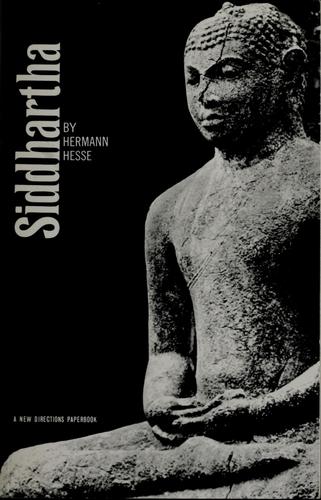
Siddhartha
This classic novel follows the spiritual journey of self-discovery of a man named Siddhartha during the time of the Gautama Buddha.
Summary
The Journey to Oneness
Hermann Hesse’s Siddhartha, published in 1922, is a luminous exploration of the spiritual path set in ancient India during the time of the Gautama Buddha. The novel is not a biography of the Buddha but a fictional tale of a man named Siddhartha who shares a similar era and cultural context. Parallel to the historical Buddha, Hesse’s protagonist is the son of a Brahmin who embarks on a quest for enlightenment, but his path diverges significantly from traditional religious doctrine. The novel serves as a critique of rigid intellectualism and an embrace of the totality of human experience-spiritual, sensual, and painful-as the only true vehicle for understanding the self.
Rejection of the Taught Path
Siddhartha begins his journey in an environment of spiritual privilege and respect. As the son of a Brahmin, he is well-versed in rituals and holy scriptures, yet he feels a profound hollowness. He observes that even his father and the elders, despite their knowledge, have not achieved the essential bliss of enlightenment. Driven by a thirst for self-knowledge, he leaves his home with his best friend Govinda to join the Samanas, a group of wandering ascetics.
For three years, Siddhartha practices self-denial, fasting, andmortification of the flesh. He learns to shed his ego and desires, yet he finds that this emptiness is temporary; the Self always returns. Govinda praises the moral improvements they achieve, but Siddhartha remains dissatisfied. He realizes that the path of rejection only leads in circles and that one cannot lose the Self permanently by trying to escape it.
The duo eventually seeks out Gotama, the Buddha, who has allegedly attained Nirvana. While Govinda is immediately converted and chooses to follow the Buddha, Siddhartha reaches a critical realization. He admires the Buddha’s perfection but concludes that wisdom cannot be taught. If a doctrine is perfect, its followers are merely reciting it, not living it. Siddhartha fears that if he stays, his Self will only find a false peace. He decides he must leave all teachers and teachings behind to forge his own path, a moment Hesse describes as his true awakening.
Into the Material World
In a radical departure from his ascetic life, Siddhartha crosses a river and enters the world of commerce and pleasure. He meets Kamala, a beautiful courtesan, who tells him he must become wealthy to win her affections. To do so, he becomes a merchant under the tutelage of Kamaswami.
Siddhartha applies the skills he learned as a Samana-thinking, waiting, and fasting-to the world of business. He finds success easily, detached from the anxiety and passion that usually plague merchants. He becomes a rich man, indulges in love, and acquires property. However, this phase of his life, which Hesse categorizes as the ‘householder’ stage, eventually sours. Siddhartha becomes sick with the ‘maladies of the soul,’ trapped in cycles of greed, lust, and lethargy. He loses his patience, smiles less often, and finds himself surrounded by deep sadness. The material world, previously alien to him, now feels like a prison. He realizes that this extreme is just as empty as the ascetic life, prompting him to flee the city in disgust.
The Lesson of the River
Disillusioned and contemplating suicide, Siddhartha returns to the river he had crossed years earlier. Standing at the water’s edge, he is overcome by despair. But as he prepares to end his life, he hears the sacred syllable ‘Om’ resonating from the water. This sound brings him back from the brink, and he falls into a deep, restorative sleep.
Upon waking, he feels reborn. He decides to stay by the river and meets Vasudeva, a simple ferryman who radiates an inner peace. Vasudeva explains that he has attained this peace through years of listening to the river. Siddhartha becomes Vasudeva’s apprentice and learns the art of deep listening.
The river becomes Siddhartha’s ultimate teacher. Through it, he gras profound metaphysical truths. He learns that time is an illusion-that the past, present, and future exist simultaneously. He sees that the river is always the same water yet constantly changing, a paradox that reflects his own life. He visualizes his life not as a straight line but as a river that flows and merges with the ocean. He comprehends the unity of all things: that good and bad, pleasure and pain, are all interconnected parts of a whole. ‘Nothing was, nothing will be; everything is, everything has being and presence.’
The Final Test
Siddhartha’s enlightenment is tested by the arrival of Kamala, who is traveling to see the dying Buddha with their young son. Kamala is bitten by a snake and dies at the riverbank, leaving the boy in Siddhartha’s care. The son, young Siddhartha, is spoiled and resentful, a city-dweller who hates the simple life of the ferryman.
Siddhartha loves his son desperately and wants to protect him, but his cruelty and stubbornness only drive the boy away. Eventually, the son runs back to the city. Siddhartha is heartbroken and considers following him, but Vasudeva intervenes. The ferryman reminds Siddhartha that no one can protect another from life; everyone must find their own path, just as Siddhartha did when he left his own father. This realization allows Siddhartha to let go of his attachment and pain, finally achieving total spiritual understanding.
The Resolution of Oneness
With Vasudeva departing into the woods, Siddhartha becomes the enlightened ferryman. The novel finds closure when Govinda, now an old monk, hears of a wise man by the river and comes to visit. He does not recognize his old friend. Siddhartha shares his wisdom with Govinda, explaining that truth is paradoxical-for every statement, the opposite is also true. He urges Govinda to love the world in its completeness, not just its parts.
In a final gesture, Siddhartha asks Govinda to kiss his forehead. Upon doing so, Govinda experiences a vision of timelessness and unity, seeing the flow of life and the face of the Buddha in the smiling ferryman. The novel concludes with the understanding that while everyone’s journey is unique-Govinda finding his way through devotion and Siddhartha through experience-both paths eventually lead to the same river of reality.