Book summary
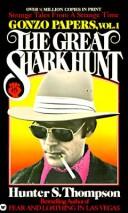
The Great Shark Hunt
Summary
The Great Shark Hunt
Strange Tales from a Strange Time
Hunter S. Thompson’s The Great Shark Hunt serves as a definitive document of the American psyche during the turbulent decades of the 1960s and 1970s. Spanning roughly 600 pages, this collection of essays tracks the evolution of Thompson’s career from a sports writer for the National Observer to the inventor of gonzo journalism. The book is a chaotic, high-velocity ride through the era’s defining moments, from the Kentucky Derby and the Super Bowl to the resignation of Richard Nixon. Thompson captures the crazy, hypocritical, and worthwhile aspects of American society with razor-sharp insight, asserting that the only way to report the truth is to become an integral part of the story.
The Rise of Gonzo Journalism
The collection opens with the pieces that cemented Thompson’s reputation, most notably “The Kentucky Derby Is Decadent and Depraved.” This essay is widely regarded as the birth of gonzo journalism, a style that rejects the myth of objectivity. In traditional reporting, the journalist is an invisible observer. Thompson, however, places himself squarely in the narrative. The story of the Derby is not really about the horse race; it is about Thompson and artist Ralph Steadman getting drunk, navigating a hostile crowd, and spiraling into a haze of violence and confusion.
This approach was not merely stylistic but philosophical. Thompson realized that trying to pretend the world is clean and rational in a “dirty world” meant getting crushed. By injecting his own subjectivity, drug use, and rage into the text, he created a more honest depiction of reality. He shattered the walls between the observer and the observed, arguing that the reporter’s vibe, biases, and physical state are essential parts of the event. This total subjectivity allows the reader to see the world through the eyes of an outsider on the edge, rather than through the sanitized lens of the establishment.
Sports, Violence, and Tribalism
Thompson’s background as a sports journalist deeply informs his worldview, and he treats politics with the same fervor he applies to football. To Thompson, sports are not harmless entertainment. They are manifestations of a primal urge for competition, gambling, and violence. He describes the “black-and-white morality of winning or losing” and the addictive buzz of playing for “all the marbles.”
In his coverage of the Super Bowl, Thompson notes the unspoken essence of the event is violence, often head trauma that can lead to violent behavior and suicide. He draws parallels between the stadium-filled with people wearing identical colors and waving towels in a display of mass allegiance-and political rallies. This tribalism, whether for a football team or a political candidate, offers the comfort of tradition and belonging but also masks a terrifying capacity for conformity and aggression. Thompson understood that the pageantry of sports is a distraction that keeps the public compliant, yet he also admitted to loving the buzz of the game.
Politics and the American Dream
The book’s middle sections dive into the dark heart of American politics, featuring excerpts from Fear and Loathing on the Campaign Trail ’72 and coverage of Nixon’s downfall. Thompson approaches politics with a savage cynicism. He views the American political system not as a democracy but as a ruthless game where the only goal is winning.
He exposes the hypocrisy of the American Dream, particularly through his reporting on foreign policy. In dispatches from South America, he criticizes American expats and businessmen who embrace a paternalistic racism, believing they are riding in on a white horse to save the locals while actually enriching themselves. He recounts brutal military interventions in Peru and Brazil, illustrating a pattern where power is used to crush the poor rather than help them.
His reporting on Richard Nixon is legendary. Thompson portrays Nixon not as an anomaly but as the ultimate symptom of a rotting system. He documents the paranoia and criminality of the Nixon administration with glee, arguing that the political machinery is designed to protect the powerful at the expense of the truth. The book suggests that the lies of politicians are accepted because society is held together by handshake agreements and a collective willingness to ignore the facade.
The Spiritual and the Material
While Thompson is known for his material concerns-politics, drugs, money-he is also a writer of the spiritual world. He frequently seeks transcendence through extreme experiences. This is evident in his obsession with what he calls “The Edge.” Whether he is taking massive doses of drugs, riding a motorcycle at dangerous speeds, or swimming until he almost drowns, Thompson is chasing a buzz that allows him to escape the mundane.
One of the key themes in his work is the Drug Culture’s mindset, which values the “Instant Reward” over anything involving a time lag between effort and end. This philosophy stands in stark contrast to the Protestant work ethic. Thompson finds a kind of spiritual clarity in this immediate experience. By shattering the walls of perceived reality with psychedelics, he believes he can see the underlying truth of the human condition-a strange, normaless game where people are just pretending to know the rules.
However, this search for meaning is often fraught with disillusionment. In the Author’s Note, written at age 40, Thompson reflects on the toll of his life and work. He grapples with existential dread, feeling conflicted between the desire for a dramatic exit and the recognition of its futility. This internal struggle highlights the high cost of living on the edge constantly.
Commercialization and Complicity
Thompson does not spare the counter-culture or the art world from his critique. He writes extensively about the commercialization of artistic expression, particularly in the music industry. He laments how true artists are left to fend for themselves in a landscape filled with opportunists profiting off their struggles.
In his encounter with Olympic skier Jean-Claude Killy, Thompson explores the complicity of fame. Killy is aware that his career as an athlete is finite and is busy setting up corporate deals to sell products to the consumer. Thompson realizes that these icons are not stupid; they are active participants in the con. They are “in on the game,” using their fame to market consumption just as ruthlessly as the corporations that employ them. This underscores a broader point about capitalism: everyone, from the politician to the athlete, is forced to play the game to survive, even if the game is rigged.
Reality and Racial Tension
Thompson’s reporting also tackles the complex reality of race relations in America. In his writings on Louisville and the South, he argues that legal victories against segregation are only the first step. He describes a “second front” where the problems are not mobs and unjust laws, but ingrained customs and traditions.
He points out that while progress happens, it often happens slowly and inconspicuously to avoid stirring up the white power structure. There remains a pervasive distrust of Black leadership among those in power. Thompson notes that fear of change and a reluctance to act in ways neighbors might frown upon are major obstacles to true equality. His work suggests that the narrative of progress is often a cover for a stagnation that is just as oppressive as overt racism, maintained through a polite but suffocating social order.
Conclusion
The Great Shark Hunt is a testament to the power of journalism when it is unafraid to offend. Hunter S. Thompson hurls himself headfirst into the chaos of his time, aiming for the naked truth and hitting the nation’s jugular vein. The book reveals that the fringes of society often offer a clearer view of reality than the center. For the modern reader, Thompson’s work serves as a reminder to question the facades of normality, to recognize the violence in our entertainment, and to understand that the search for truth often requires getting a little dirty. He leaves us with a challenge to look at the “frenzied and anxious myasma” of modern life and see it for what it is: weird, dangerous, and occasionally beautiful.