Book summary
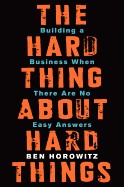
The Hard Thing About Hard Things
Brutally practical lessons from building and running hard companies.
Summary
Most business books promise a formula for success, but Ben Horowitz argues that there are no recipes for running a company when things fall apart. In ‘The Hard Thing About Hard Things,’ Horowitz draws on his experience as a CEO to address the inevitable disasters, screw-ups, and impossible decisions leaders face. He explains that while anyone can dream big, the true test of leadership is dealing with the nightmare scenarios: missing goals, laying off friends, and managing when great people develop a sense of entitlement.
The book offers practical advice on navigating these struggles, starting with the distinction between ‘Peacetime’ and ‘Wartime’ CEOs. A Peacetime CEO focuses on long-term strategy and culture, whereas a Wartime CEO must be obsessive, prioritize immediate survival, and break protocol to get the job done. Horowitz emphasizes that the most crucial management skill is the ability to ‘tell it like it is.’ Rather than succumbing to the pressure to be overly positive, leaders must share bad news freely. This transparency builds a culture of trust, ensuring everyone focuses on solving problems rather than covering them up.
Horowitz also delves into the operational realities of scaling a business. He warns that large organizations are often slowed down by single individuals hesitating to make decisions; such bottlenecks must be diagnosed and cleared within 24 hours. He outlines a framework of priorities: People, Products, and Profits-in that order. If you don’t take care of your people, the other two won’t matter. Additionally, he advises leaders to embrace the struggle, noting that when the odds are statistically terrible, the task remains the same: make and execute a plan.
On the subject of team building, the author suggests that leaders should not strive to be liked, but rather to make the hard decisions quickly-such as cutting a popular but non-strategic project today rather than delaying it. When hiring, he advises looking for exceptional strengths rather than a lack of weaknesses, and to involve multiple people in brainstorming while making the final decision solo to avoid consensus-based weakness. Finally, Horowitz highlights the importance of minimizing politics by maintaining strict policies on promotions and compensation, and ensuring that the company hires for the right kind of ambition-belief in the company’s mission first, and personal success second.